Barbara Rose
The War of the RosesBarbara Rose is a wife, mother, cook, and aspiring caterer whose break with Oliver Rose turns the home they built together into the central prize of a bitter separation. Her story gives material weight to the question of independence: she has spent years supporting Oliver’s ambitions and shaping their shared household, yet must fight to make a life and livelihood of her own. The conflict escalates from a declaration that the marriage is over to a contest over property, money, and control of the house, with their children and Ann drawn into its emotional consequences.
Identity and Background
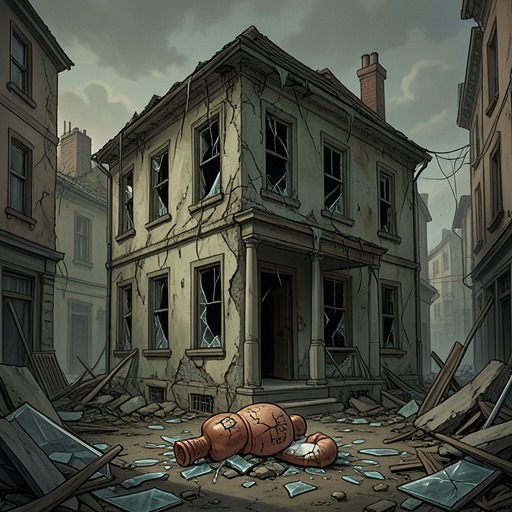
As Barbara Knowles, she was a student at Boston University and spent a summer working as a baking assistant at the Chatham Arms. She wanted to volunteer for Jack Kennedy’s campaign against Nixon but could not afford to do so. Instead, she took paid work she enjoyed. When she and Oliver walked through the rain to deliver a ceramic boxer she had bought for a maid whose brother competed in Golden Gloves, she explained that she wanted the gift to be more than a tip. The episode presents a practical generosity that coexists with a keen awareness of money and work.
Cooking was not a new ambition. Barbara had learned from her mother, an excellent cook, and from professional cooks and bakers she worked for during summer vacations. As the children required less of her time, she began to imagine turning that experience into a business. Yet the desire was accompanied by a sense of inadequacy and discomfort with being assigned the conventional role of a wife. She resisted the label even as she examined how much of her life had been organized around domestic responsibilities.
Marriage, Home, and the Decision to Leave
Barbara and Oliver’s marriage was sustained by shared projects. They collected antiques, searched auction houses and old Virginia and Maryland homesteads, and made European trips that added memories to their collection. Their house became the largest of these joint undertakings: they admired it enough to commission an engraving for their Christmas card, and Barbara understood it as the embodiment of their life together. Oliver helped build the kitchen for her catering plans, devoting weekends to its construction; Barbara learned practical repairs and worked with him on the sauna, shower, and furniture. Their cooperation was real, but so was the imbalance she later identified in the labor and opportunities each had contributed.
In retrospect, Barbara sees their life as a succession of projects organized around Oliver’s advancement and the family’s growth. She supported him through law school, played the accommodating spouse among his senior partners, raised the children, and helped create a home in which he could rest. The house project seemed to complete that pattern. She could not identify a single moment when her dissatisfaction began, but recognized that the idea of life without him had been smoldering for a long time.
Her decisive explanation to Oliver is that she did not care whether he lived or died when he was hospitalized in New York, and that she had not cared for a long time. Oliver struggles to understand how she can dismiss their relationship and family so abruptly. For Barbara, however, the blunt admission marks the point at which a long inward separation becomes explicit. At a family gathering, she announces a victory in a restrained but determined manner; Oliver kisses her, while Ann turns away, suddenly jealous. The different reactions reveal how the separation is already affecting people beyond the couple.
Independence, Money, and the House
Barbara explains her decision to Eve as a declaration of independence. She wants to fulfill her own aspirations and no longer be an appendage to her husband. She tells her daughter that the separation should not damage Eve’s relationship with Oliver and expects the process to remain civilized. Eve, who had believed her parents had one of the strongest marriages around, cannot reconcile that image with her mother’s unhappiness. The announcement therefore grants Barbara a voice of her own while unsettling the family’s assumptions about what their marriage meant.
The division of property sharpens the difference between financial value and lived value. Oliver initially tells Murray Goldstein that half the value of the house and its contents would be acceptable, since the couple had built their life there together. Harry Thurmont explains to Barbara that this means a cash settlement based on an independent appraisal, not possession of the house. He estimates that she might receive four or five hundred thousand dollars after fees. Barbara rejects the idea that such a payment is fair compensation. She says she devoted nearly twenty years to Oliver’s career and needs, gave up her schooling, had their children, and spent more time on the house than he did. She cannot match his earning power, and fears that he could later replace the house’s value while she would be left with only cash. She wants the house and its contents because they represent the life she made, not merely a sum to be divided.
That claim meets the practical difficulties of earning a living. Barbara develops a catering business and persuades the French Market to try her rabbit pâté, but customer payments arrive slowly while suppliers expect quicker payment. Although their separation agreement bars her from using household funds for the business, she borrows from that money to stay afloat. A meat supplier cuts her off, dismisses her accounts, and tells her women should not be in business; when she throws chopped meat at him, Thurmont treats the incident as good business rather than a reason to slow down. Barbara also falls behind on gas, electricity, and telephone bills. Her aspiration is genuine, but the cash-flow crisis exposes how little practical instruction she has received and how much her independence still depends on resources and arrangements formed inside the marriage.
Family Strain and the Expanding Conflict
The separation does not stay between Barbara and Oliver. Ann, who knows more than she lets the family see, feels guilt and initially tells Eve that the rupture may be temporary. Eve corrects her: her mother has said the separation is her own decision and that she wants freedom to pursue her aspirations. Ann’s position as confidante and observer grows more difficult as every movement in the house becomes a possible sign of the parents’ intentions. The children first try to bring their parents back together, then retreat into grudging acceptance as the hostility persists.
Eve’s fear shows the cost of that hostility. She tells Ann she will not go to camp because she is afraid to leave her parents alone together. She asks Ann to keep the reason secret, explaining that she worries about what might happen in an empty house. She wishes either that her parents would reconcile or that one side would move out; she cannot understand why they continue to live under one roof. Later, when Eve insists that she and Josh are still their parents’ children and asks why neither parent has called or written, her distress makes plain that the struggle over separation has become a rupture in the children’s sense of family security.
Barbara’s own anger also becomes harder to separate from the war she says the spouses are waging. After a weekend disaster involving a detective who demands immediate payment and alleges that Oliver stole equipment, she turns to preparing rabbits for her catering work. She recognizes that jealousy and resentment have entered her response to Ann, and admits that her behavior toward her friend has become tactical rather than kind. The discovery that Oliver has tampered with the kitchen appliances turns the domestic space into a weapon. Injured by the traps, Barbara cleans and disconnects the appliances, obtains hand-operated kitchen tools, and resolves to finish her dinner without them. The episode marks a change from pursuing independence through work and negotiation to meeting violence with determined counteraction.
Escalation and Narrative Significance
Barbara’s retaliation reaches the house’s furnishings as well as its kitchen. She has long hated the large library armoire and weakens its front legs and fixes its doors, hoping it will fall with greater force than it does. With the children away at camp, she sees herself as free to maneuver and decides she must drive Oliver from the house, even at the risk of her life. These acts convert the couple’s accumulated possessions—once records of shared taste and labor—into instruments in their struggle for control.
For a planned meeting with Oliver, Barbara sets the dining-room table with all ten candles in a silver rococo candelabrum, silver plates and goblets, and a slice of freshly made pâté with melba toast on his plate. She chooses the dining room because it is her domain and keeps a cleaver in a shopping bag beside her as reassurance. The carefully arranged meal places the language of hospitality beside the threat of force: the room and objects that once belonged to a shared home now stage a confrontation between its occupants.
Barbara’s trajectory is neither a simple escape from marriage nor a settled achievement of independence. Her assertion of self is grounded in identifiable labor—raising children, supporting Oliver, designing the kitchen, learning repairs, and building a catering business—but that labor does not automatically give her control of the home or financial security. The separation draws Ann and the children into shifting roles of observer, confidante, and anxious intermediary, while the house changes from a joint creation into both disputed property and a dangerous battleground. Barbara’s demand that the house be recognized as more than its appraised value is therefore also a demand that the life invested in it, and the person she hopes to become beyond it, not be reduced to a cash settlement.